Manifesto
A Gen Z
Composer
Formal ambition and emotional directness are not opposites. They never were.
Manifesto
Formal ambition and emotional directness are not opposites. They never were.
A security guard at a daycare listened to three sections of my orchestral music. She had no musical training. No theoretical framework. No professional reason to say anything kind.
She said she felt it in her chest.
Not “that was interesting.” Not “that was impressive.” She felt it in her chest. Her body responded before her mind could categorize what she was hearing. And when I told her the piece was about men’s mental health—about a young man who can’t put his feelings into words—she said the voice inside the orchestra was the most powerful part.
She didn’t know she was describing Dramaspeak, a vocal technique I designed to sound like the interior monologue of someone who has never been allowed to say what they feel. She didn’t know the harmonic language was built on chromatic intervallism across three interlocking systems. She didn’t evaluate the technique. She received the communication.
That moment is the entire foundation of everything I believe about music.
Philosophy
I call my compositional philosophy Quintessentialism. The core idea is simple, even though the music isn’t: formal ambition and emotional directness are not opposites. They never were. The greatest music in the repertoire in my opinion—Mahler, Tchaikovsky, Beethoven, Shostakovich—was simultaneously the most structurally sophisticated and the most physically overwhelming music of its time. Somewhere along the way, the concert world decided you had to choose. I don’t.
Quintessentialism means writing music that demands everything from me as a composer—chromatic intervallism, large-scale thematic architecture, orchestration that treats every instrument as a voice with something to say—and engineering all of that so it lands in a listener’s body before it reaches their intellect. The security guard didn’t hear a simplified version of my music. She heard the actual thing—the dissonance, the Dramaspeak, all of it—and it hit her physically. The complexity produced the emotion. It didn’t compete with it.
The thing I care about most as a composer is closing the gap between what I feel and what a listener feels. That gap is where music can lose people. I feel something at full intensity, I encode it into notation, it passes through an orchestra, through the air, into a stranger’s body—and if I’ve done my job, something survives that journey. The security guard is proof that something survived. The signal made it from my nervous system into her ribcage. That’s the work. That’s always the work.
— Christian LaubaHuge symphonic work my dear John! Wonderful!!! I took time to listen to the whole piece, bravissimo!!!!
French composer, championed by György Ligeti, on The Burden of Having a Superpower
He told me they should easily recognize my huge talent.
Quintessentialism isn’t about sounding like anyone. It’s about working at the highest level of craft I can reach while making sure every note of that craft serves the listener’s experience.
The Work
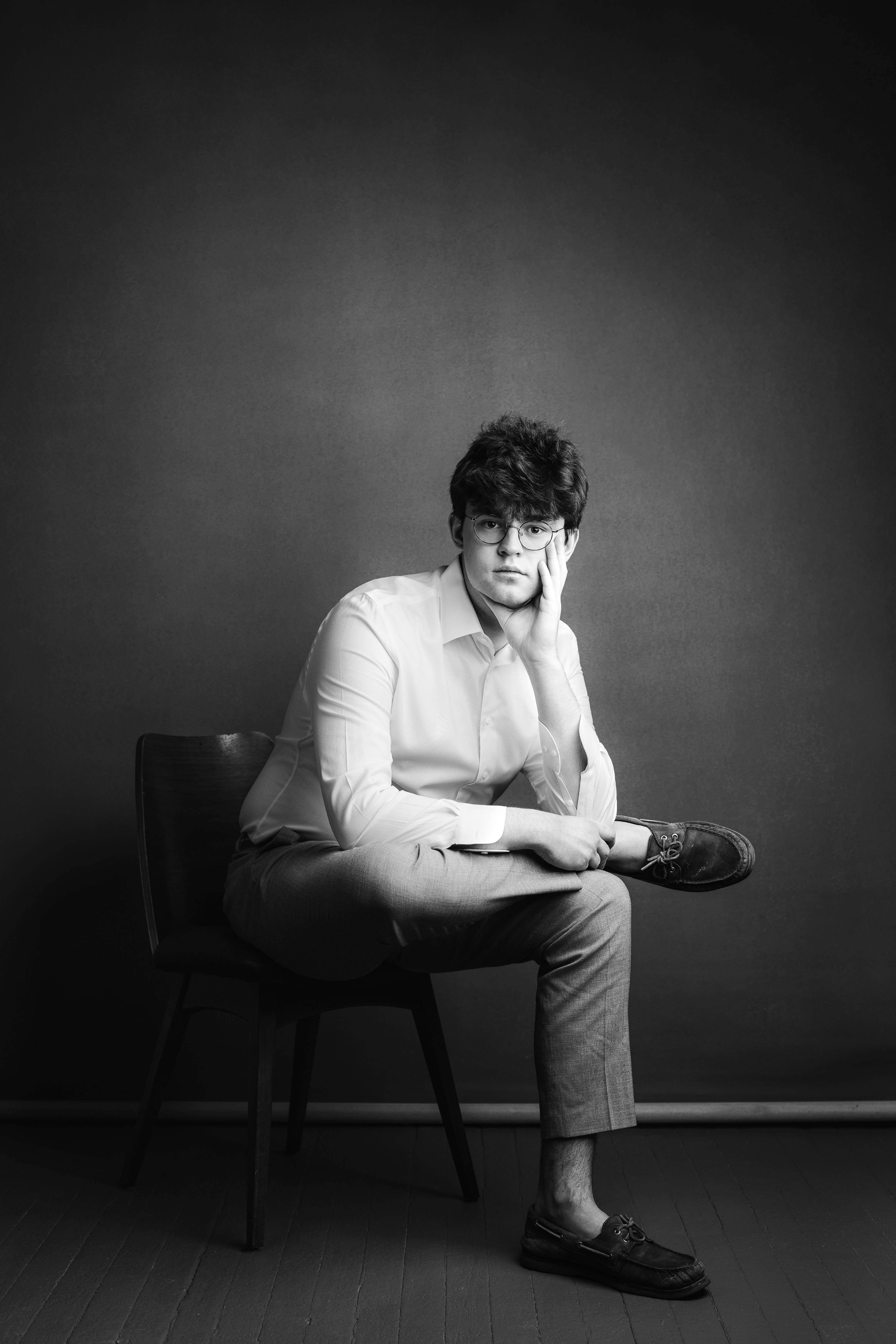
The Burden of Having a Superpower, my 37-minute work for full orchestra and vocalist, is where that commitment became a real piece. It follows a continuous arc across 21 sections—the journey of a boy who cannot put his feelings into words becoming a young man who learns that expressing your emotions is one of the bravest things you can do. The vocalist is me. The story is mine. And the Dramaspeak—my voice speaking raw, unsung text inside the full weight of the orchestra—is the moment where the mask drops completely and I stop hiding behind the instruments.
Paul K. Joyce described the ending of the piece this way: powerful, muscular writing juxtaposed with moments of tenderness, capturing the pain and ecstasy of being alive.
The pain and the ecstasy. Both at once. Because that’s what being alive actually feels like, and I don’t think music should lie about it.
Conviction
I am not trying to tell anyone how music should be written. I am telling you how my music works and why.
My music optimizes for the listener’s experience. I think about tension and release at the neurochemical level. I think about what a human nervous system does when a brass chorale emerges from silence after thirty minutes of struggle. I think of that as rhetoric—the art of making a point land in someone’s body, not just their intellect.
You cannot prove a point if the person you’re trying to make the point to isn’t listening.
My music is about things I believe matter right now. Emotional suppression. The cost of silence. What it takes for a young man to stop performing strength and start practicing honesty. I write about these things because I’ve lived them, and I use the full force of a symphony orchestra because it is the most powerful delivery system for human emotion that I know of. I’m not interested in using that power politely.
The Promise
This is what being a Quintessentialist Gen-Z composer means to me. It doesn’t mean rejecting the tradition. It means honoring a promise the tradition made—that orchestral music would be for everyone, that it would overwhelm people, that it would make a room of strangers feel the same thing at the same moment.
The security guard at the daycare didn’t need a subscription series to understand my music. She didn’t need a pre-concert lecture or a music appreciation course. She needed three sections and the truth about what the piece was about, and it hit her in the chest.
There are millions of people like her.
People who would love orchestral music if they were met where they are instead of told where to stand. People who found Mahler on Spotify and Tchaikovsky on TikTok and are waiting for someone to take them seriously as an audience.
I’m writing for them. I’m building the audience on social media. And I’m not asking permission.